
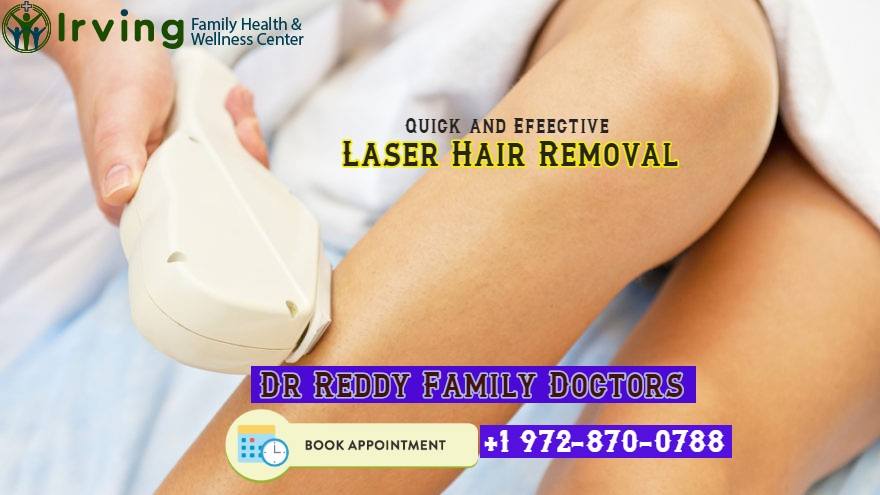
Laser hair removal is a medical process that uses a concentrated beam of light (laser) to remove unwanted hair.
During laser hair removal, a laser emits a light that is absorbed by the tint in the hair. The light energy is transformed to heat, which damages the tube-shaped sacs within the skin that produce hairs. This damage inhibits or delays upcoming hair growth.
Although laser hair removal efficiently delays hair growth for long periods, it usually doesn’t result in permanent hair removal. Several laser hair removal treatments are needed for initial hair removal, and maintenance treatments might be needed as well. Laser hair removal is most effective for the public who have light skin and dark hair.
Why We Need
Laser hair removal is used to decrease unwanted hair. Common treatment locations contain legs, armpits, upper lip, chin, and the bikini line. However, it’s possible to treat unwanted hair in closely any area, except the eyelid or surrounding area.
Hair color and skin type result the success of laser hair removal. The basic standard is that the pigment of the hair, but not the pigment of the skin, should absorb the light. The laser should damage only the hair cavity while avoiding damage to the skin. Therefore, a contrast between hair and skin color dark hair and light skin results in the top outcomes.
The risk of damage to the skin is greater when there is a slight difference between hair and skin color, but advances in laser technology have made laser hair removal an option for people who have blacker skin. Laser hair removal is a smaller amount effective for hair colors that don’t absorb light well: gray, red, blond and white. However, laser treatment options for light-colored hair continue to be advanced.
Risks of Laser Hair Removal
Dangers of side effects vary with skin type, hair color, treatment plan and adherence to pre-treatment and post-treatment care. The most common side effects of laser hair removal contain:
Skin irritation: Temporary discomfort, redness, and swelling are likely after laser hair removal. Any signs and symptoms typically disappear within some hours.
Pigment changes: Laser hair removal might dim or lighten the affected skin, usually temporarily. Skin lightening primarily affects those who don’t avoid sun exposure previously or after treatment and those who have darker skin.
Hardly, laser hair removal can cause blistering, crusting, scarring or other changes in skin texture. Other rare side effects include graying of treated hair or excessive hair growing around treated areas, particularly on darker skin. Laser hair removal isn’t suggested for eyelids, eyebrows or surrounding areas, due to the possibility of severe eye hurt.
 DrReddyFamilyDoctors